Few retirement planning topics generate more debate than Roth conversions. Some view them as one of the most powerful tax planning opportunities available. Others argue they’re frequently oversold, causing retirees to pay taxes years before they need to. Both perspectives have merit, but the problem is that they often focus on the wrong question.
Many conversations begin by asking what tax bracket you’re willing to pay to complete a conversion. Some investors refuse to convert if it means moving into the next federal tax bracket. Others intentionally “fill up” their current bracket each year. Still others assume tax rates are destined to rise, making almost any conversion worthwhile.
While tax brackets matter, they rarely tell the whole story. A Roth conversion doesn’t happen in isolation. It affects everything from future Required Minimum Distributions (RMDs) and Medicare premiums to the taxation of investment income and the assets you ultimately leave to your heirs. The real question isn’t whether you should convert to a Roth IRA. It’s whether paying taxes today improves the overall tax efficiency of your retirement plan.
Retirement Creates Tax Planning Opportunities
During your working years, taxes are relatively predictable. Most income comes from wages, taxes are withheld automatically, and there are relatively few opportunities to control when income is recognized.
Retirement changes that dynamic completely. Instead of relying on a paycheck, you may draw income from traditional IRAs, Roth accounts, taxable brokerage accounts, Social Security, pensions, annuities, dividends, interest, and capital gains. More importantly, many of those income sources are discretionary. You decide which accounts to spend from, whether to realize capital gains, and how much, if any, to convert from a traditional IRA to a Roth IRA.
That flexibility creates opportunities to manage your lifetime tax bill in ways that simply aren’t possible during your working years. For many retirees, it’s the first time they have meaningful control over when and how much taxable income they recognize. The same flexibility also requires more thoughtful planning. Decisions made today can influence future RMDs, Medicare premiums, Social Security taxation, investment income taxes, and even estate planning opportunities. A Roth conversion isn’t just a tax decision for this year. It’s one piece of a much larger lifetime tax strategy.
Looking Beyond Your Tax Bracket
Suppose two retirees each convert $75,000 from a traditional IRA to a Roth IRA. Both remain within the 24% federal income tax bracket. On paper, they appear to have made identical decisions. However, the true cost of those conversions could be very different.
For one retiree, the additional income may trigger a higher Medicare premium under the Income-Related Monthly Adjustment Amount (IRMAA), increasing Medicare Part B and Part D costs beginning two years later. The conversion could also expose more investment income to the Net Investment Income Tax (NIIT) or reduce the tax efficiency of realizing capital gains.
The second retiree may avoid all those consequences because their income remains below each threshold. Even though both taxpayers stayed in the same federal tax bracket, one paid significantly more for the exact same Roth conversion.
That’s why experienced retirement planners rarely evaluate Roth conversions by looking only at the IRS tax tables. Instead, they focus on your effective marginal tax rate, which measures the total cost of generating one additional dollar of taxable income after accounting for taxes, Medicare premiums, and other income-related thresholds. In many cases, that effective rate can be meaningfully higher than your stated federal tax bracket.
Additional taxable income may increase Medicare premiums through IRMAA. It may also expose more investment income to the 3.8% Net Investment Income Tax, reduce flexibility to realize capital gains, or make other tax planning opportunities less attractive during that year. Viewed individually, each consequence may seem manageable. Together, they can meaningfully increase the true cost of a conversion.
Those additional costs are real, but they don’t automatically argue against converting. It is important to evaluate whether paying those costs today improves the overall tax efficiency of your retirement plan. Paying more in Medicare premiums for a year or triggering additional taxes today may still be worthwhile if it helps lower future RMDs or creates greater flexibility later in retirement. The goal isn’t to minimize this year’s tax bill, but to improve your tax picture over the course of retirement.
That effective marginal tax rate, the one that blends federal brackets, IRMAA thresholds, and NIIT together, is the number that actually determines whether a conversion makes sense. Seeing exactly where those thresholds sit relative to your income is much easier with a visual tool than with a tax table. Our workshop, Using Tax Maps to Enhance Tax Planning, walks through how to map out these thresholds so you can see the true cost of a conversion before you make it.
The Best Time for a Roth Conversion Is Often Temporary
One of the most valuable planning opportunities in retirement is commonly referred to as the “tax window.” Often, retirees experience a period after they stop working but before they begin receiving Social Security or RMDs. During these years, taxable income may be unusually low. This offers an opportunity to complete Roth conversions at relatively modest tax rates before future income sources begin stacking on top of one another.
Once Social Security begins, RMDs start, and investment income continues to accumulate, your ability to control taxable income often becomes much more limited. That doesn’t mean every retiree should rush to convert during this window. It does mean these years deserve careful analysis because there may be planning opportunities that simply won’t exist later.
Should Future Tax Rates Influence Your Decision?
No discussion of Roth conversions is complete without someone arguing that tax rates are historically low and almost certain to increase. Congress has revised tax laws countless times over the past several decades. This has resulted in rate changes, adjustments to deductions, and revisions to entire sections of the tax code.
Building a retirement plan around predictions about future legislation is difficult because those predictions are impossible to verify. Instead, focus on the variables you can reasonably evaluate, such as the size of your pre-tax IRA, when RMDs will begin, legacy goals, and other important factors that drive your plan. These considerations are far more actionable than trying to forecast tax policy twenty years into the future.
Roth Conversions Are Rarely an All-or-Nothing Decision
One misconception about Roth conversions is that you either convert aggressively or not at all. In practice, many successful strategies fall somewhere in the middle.
Rather than converting a large amount in a single year, retirees may complete a series of smaller annual conversions that intentionally stay below key tax thresholds. Others blend withdrawals from taxable accounts, traditional IRAs, and Roth accounts to better manage taxable income throughout retirement. This gradual approach often provides greater flexibility because it allows adjustments as tax laws, investment returns, and spending needs evolve. Retirement planning is rarely improved by eliminating flexibility.
A Roth Conversion Is Part of a Larger Tax Strategy
A Roth conversion is never just a Roth conversion. It’s one decision in a much larger retirement income strategy, and its value depends on everything happening around it.
For some retirees, the years between retirement and RMDs present an opportunity to move a meaningful portion of their IRA into a Roth account while taxable income is relatively low. Others may benefit from smaller annual conversions that avoid crossing key Medicare or tax thresholds. And in some cases, the math simply won’t support converting at all.
That’s what makes these decisions so personal. Two households with similar portfolios can arrive at very different conclusions because their spending needs, income sources, legacy goals, and future tax picture aren’t the same. Rather than searching for a rule of thumb or trying to identify the “right” tax bracket for a conversion, it’s more productive to step back and consider how the decision fits within your broader retirement plan. A Roth conversion should make the entire plan more efficient, not just this year’s tax return.
A Roth conversion isn’t really about deciding how much tax you’re willing to pay today. It’s about deciding whether paying some tax today leaves you with a more flexible and tax-efficient retirement over the decades ahead.
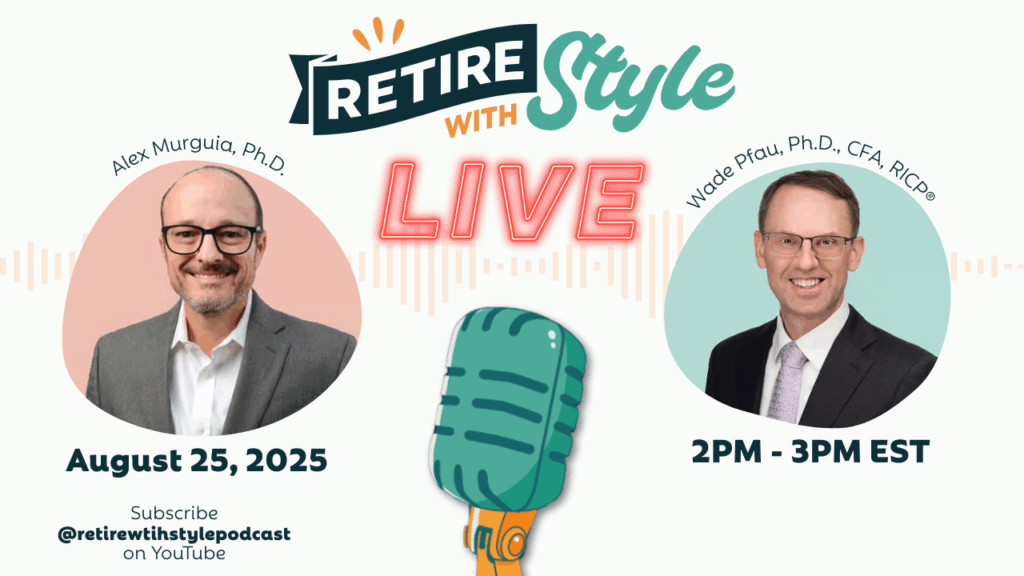
Want to learn more? Listen to Episode 237 of the Retire With Style Podcast.